Yoga for Lower Back Pain: What Helps and What Makes It Worse
Yoga has some of its best evidence in non-specific lower back pain — the ordinary, mechanical, comes-and-goes kind. It also contains several poses that reliably make a irritated back worse, and they are not the ones beginners expect.
Knowing which category your back falls into matters more than any sequence, so that is where this starts.
First: which kind of back pain is this#
No online guide can diagnose you, but the distinction that matters is not subtle, and it decides whether you practise or make an appointment.
| Sign | Likely mechanical | Needs assessment |
|---|---|---|
| Where it is | Spread across the lower back | Sharp and pinpointed, or shooting down a leg |
| How it feels | Dull, achy, stiff | Burning, electric, or with numbness or tingling |
| With movement | Eases as you move | Worse with any movement, or wakes you at night |
| Pattern | Worse after sitting, better after walking | Constant, unrelated to position |
| Other symptoms | None | Weakness in a leg, changes in bladder or bowel |
Anything in the right column, and particularly numbness, leg weakness or bladder changes, means stop and see a doctor now rather than trying a sequence. That is not caution for its own sake.
The gentle sequence#
- Lying on your back, knees bent, feet flat. Two minutes of slow breathing with a long exhale. Tension is part of the pain, and this part is not filler.
- Knees to chest, then slow circles with the knees, one minute.
- Pelvic tilts: gently flatten the lower back to the floor on an exhale, release on an inhale. Ten slow repetitions.
- Cat-cow on hands and knees, ten rounds, staying well within a comfortable range.
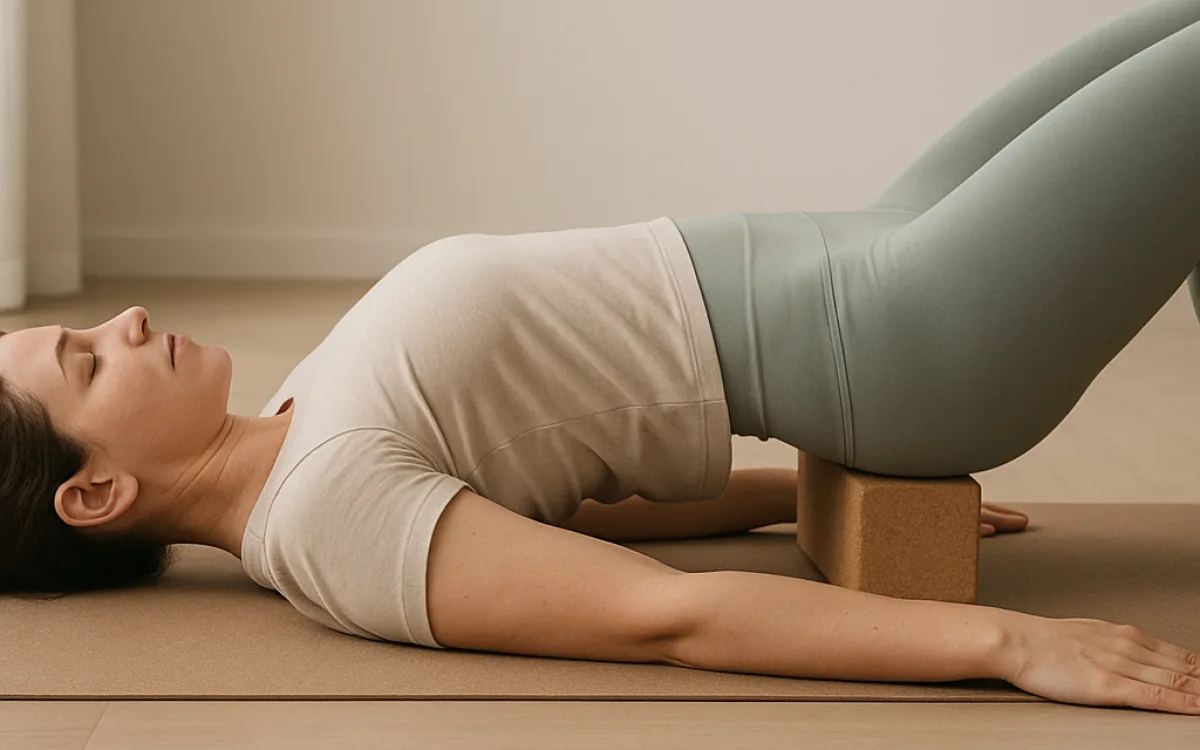
- Supported bridge with a block flat under the sacrum, two minutes. This is the most reliably helpful pose in the sequence.
- Reclined twist, one minute each side, with a cushion under the knees.
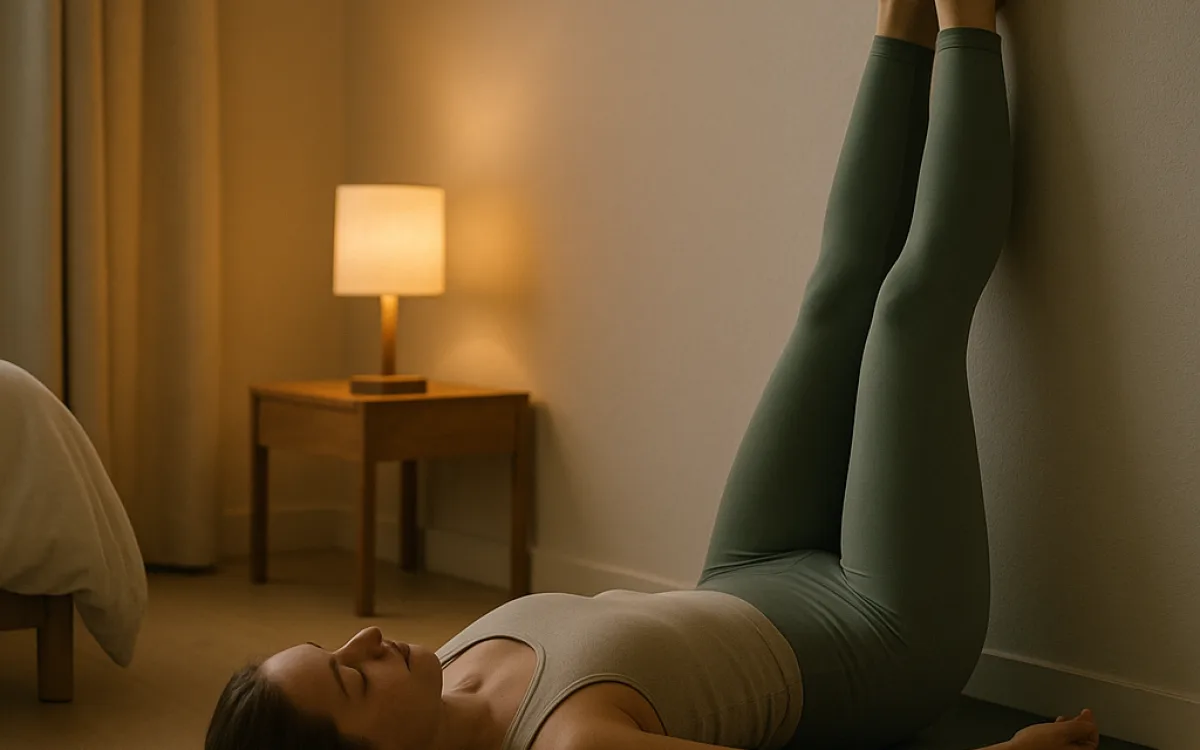
- Child pose with the knees wide, one minute, or legs up the wall if child pose is uncomfortable.
What to avoid while a back is irritated#
- Deep standing forward folds with straight legs — the classic way to aggravate a disc problem.
- Full wheel and other deep backbends.
- Seated forward bends with straight legs, which load a flexed lumbar spine while seated.
- Strong twists where you use your arms to lever yourself further round.
- Sit-ups and full boat pose. Core strength helps backs; spinal flexion under load usually does not.
Notice that several of these appear in ordinary beginner classes. If you are practising with a sore back, take child pose during them rather than a modified version — sitting one pose out is uneventful.
Why it works when it works#
For mechanical back pain, the useful effects are not the ones you would guess. Range of motion is a small part of it.
- Movement itself reduces pain sensitivity — one of the most consistent findings in back pain research.
- Gentle repeated movement reduces the protective muscle guarding that keeps the back stiff and sore.
- Breathing with a long exhale lowers the arousal that amplifies persistent pain.
- Confidence in moving is protective in itself: fear of movement predicts worse outcomes more strongly than most physical findings do.
How long to give it#
- Practise the sequence daily for two weeks, keeping every movement clearly within comfort.
- Expect small changes: mornings a little easier, sitting tolerated a little longer. Not the pain disappearing.
- At two weeks, if it is somewhat better, keep going and slowly add gentle standing poses.
- If nothing has changed in two weeks, or if anything has worsened, stop and see a physiotherapist or doctor. Another fortnight of the same sequence is not the answer.
Frequently asked questions
Which yoga poses are best for lower back pain?
Supported bridge with a block under the sacrum, cat-cow, pelvic tilts, a reclined twist with the knees supported, and legs up the wall. All five are done lying down or on hands and knees, stay well within a comfortable range, and require no strength. The pattern is deliberate: gentle repeated movement and reduced muscle guarding, not stretching further.
Can yoga make back pain worse?
Yes, and specific poses are usually responsible: deep forward folds with straight legs, full backbends, seated forward bends, and levered twists. If a session leaves your back more sore the next morning than it was before, something in the sequence is too much — reduce the range rather than stopping entirely, and remove those poses first.
When should I see a doctor instead of doing yoga?
If the pain shoots down a leg, comes with numbness or tingling, involves weakness in a leg, wakes you at night, follows a fall or injury, or comes with any change in bladder or bowel function. Also if two weeks of gentle daily practice has changed nothing at all. Those are assessment situations, not sequence-selection situations.
yoga for lower back painyoga back pain beginnersposes to avoid back painsupported bridge posegentle yoga for backback pain stretches