Common Beginner Yoga Mistakes and How to Fix Them
Most beginner mistakes are not technical. They come from one underlying error: treating yoga as a performance to be matched rather than a practice to be adjusted.
Here are the ten that cause the most trouble, roughly in the order you will encounter them.
The five that cause discomfort#
- Holding your breath. It happens whenever a pose is slightly too much, and it is the most reliable signal you have. Fix: come out until the breath is even again, and stay there.
- Chasing depth. Getting lower is not the goal in any pose in this site. Fix: pick the depth where you could hold the shape for five breaths and stay there.
- Locking the knees. Standing with the knees pressed hard back loads the joint and switches off the muscles that should be working. Fix: a micro-bend in every standing pose.
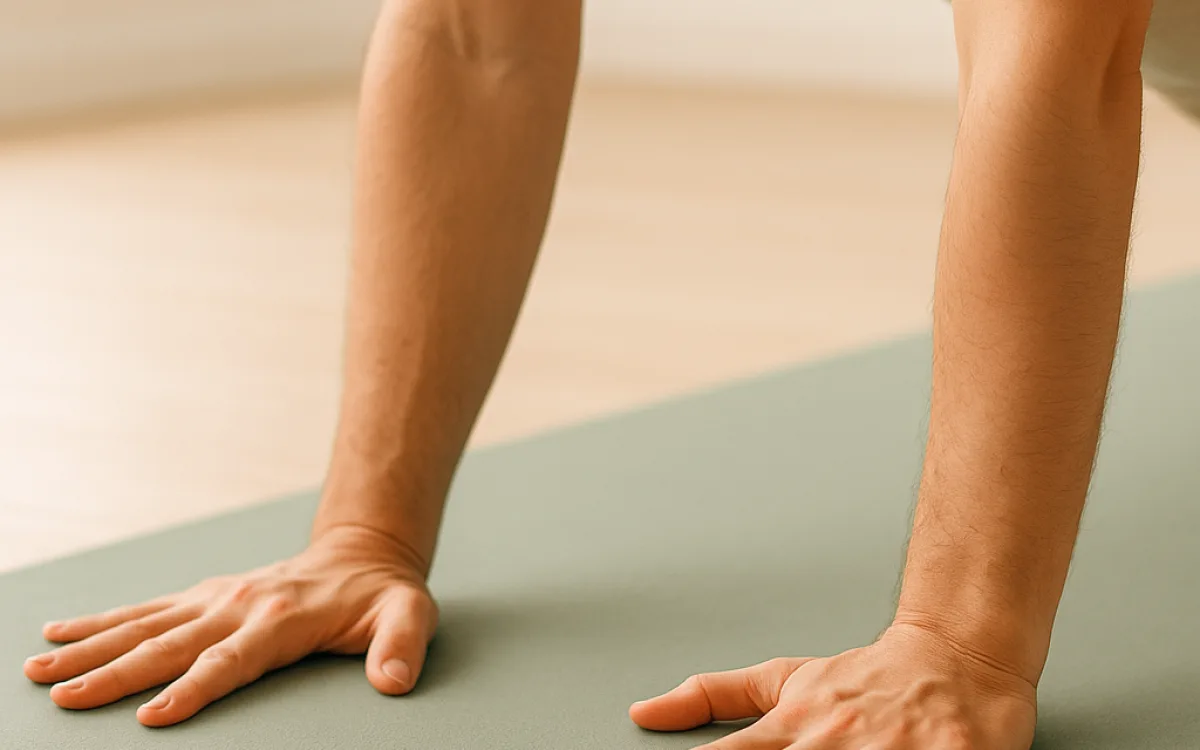
- Weight in the heel of the palm. This causes almost all beginner wrist pain. Fix: spread the fingers wide and press the knuckle at the base of the index finger down.
- Skipping savasana. It feels like doing nothing and is where the session consolidates. Fix: five minutes, every time, under a blanket.
The five that stall progress#
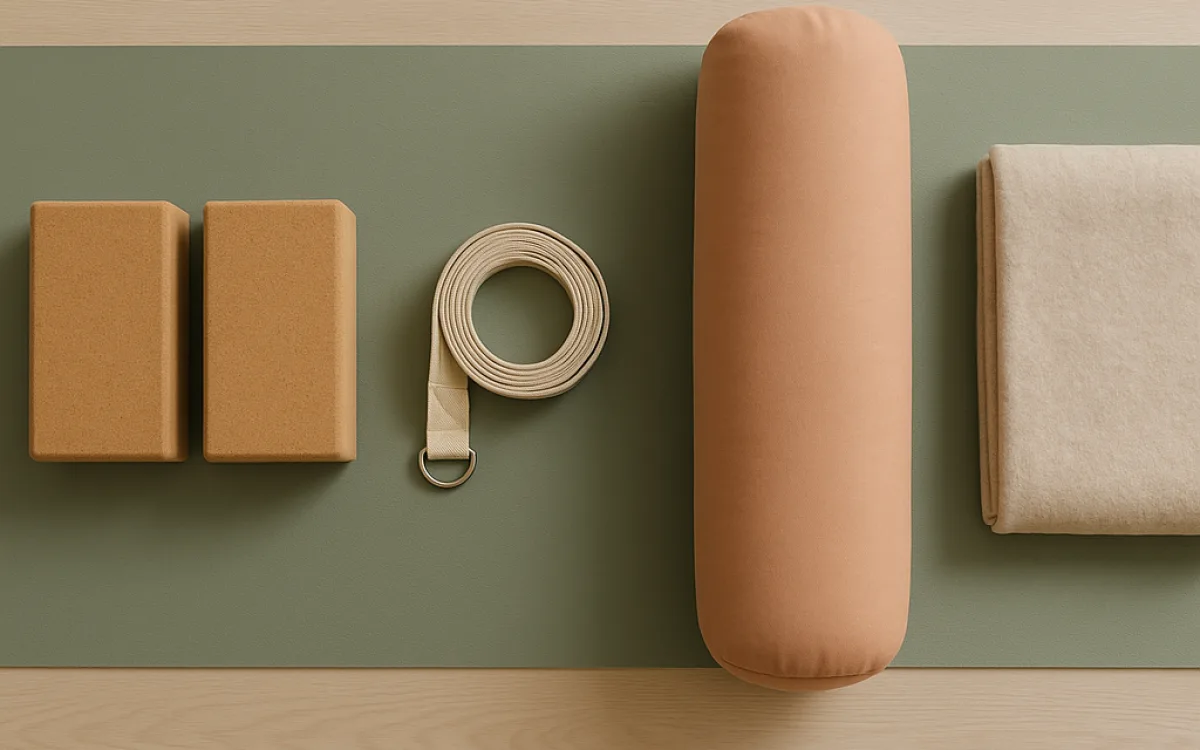
- Refusing props. A block is not a concession; it changes where the pose happens. Fix: take the block, keep the long spine.
- Practising too long, too rarely. Fix: three short sessions a week beats one long one, for reasons of motor learning rather than motivation.
- Constant novelty. A different class every session means never repeating anything long enough to learn it. Fix: repeat one sequence for a month.
- Only doing the poses you like. Almost everyone avoids the direction their body needs most. Fix: notice which side or which shape you skip, and add it deliberately.
- Comparing yourself to the person in front. Hip and shoulder structure vary enormously and are not trainable. Fix: compare yourself to yourself, six weeks ago.
Where each mistake shows up#
| Symptom | Usual cause | First thing to change |
|---|---|---|
| Sore wrists | Weight in the heel of the palm, too many rounds | Hand position, then fewer repetitions |
| Sore lower back after practice | Backbends too deep, forward folds with straight legs | Bend the knees, reduce the backbend by half |
| Knee pain in standing poses | Front knee drifting inwards | Shorten the stance until the knee tracks the foot |
| Knee pain sitting cross-legged | Sitting flat on the floor with tight hips | Sit on a folded blanket so the hips are above the knees |
| Neck ache in downward dog | Head held up rather than hanging | Let the head go entirely |
| No progress after two months | Too infrequent or too varied | Three sessions a week, same sequence |
The mistake behind the mistakes#
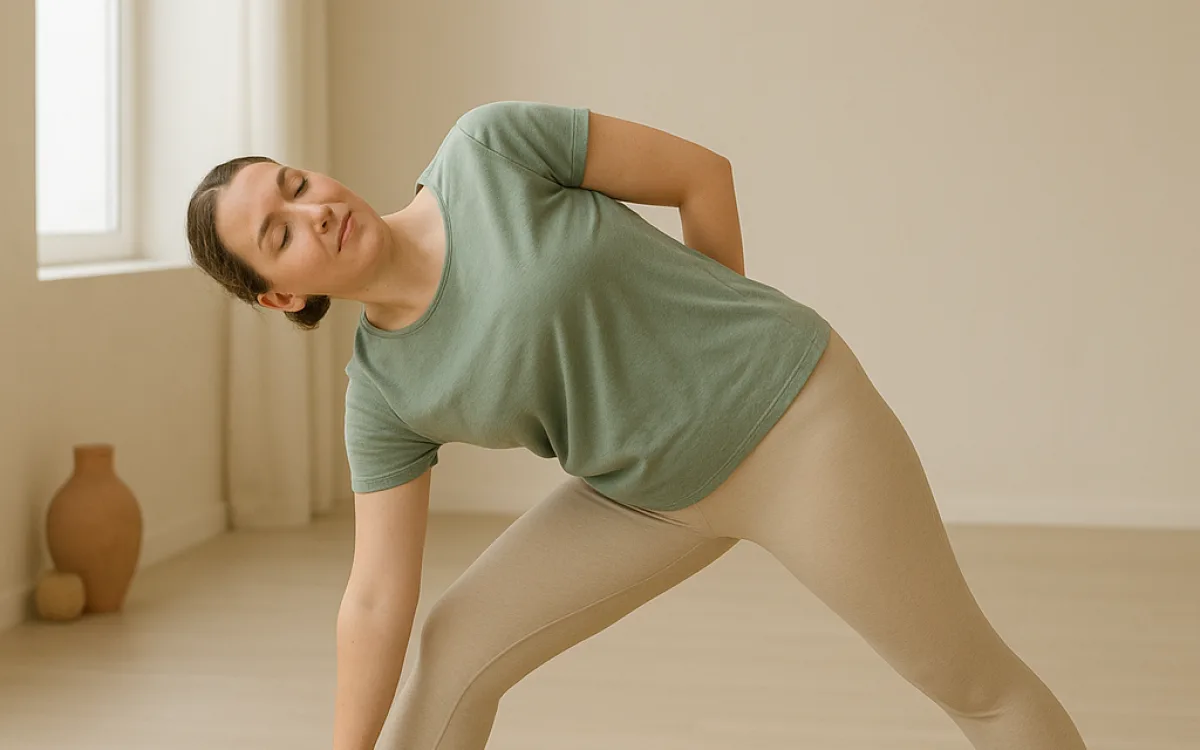
Almost every item above comes from the same place: taking the photograph as the target. The image of a pose is one person with one particular skeleton doing one thing on one day.
- Your femur length changes what a lunge can look like. Your hip socket depth changes what a butterfly pose can look like. Neither is trainable.
- A pose is a set of relationships — knee over ankle, spine long, weight even — not a shape to be matched.
- When a photograph and your body disagree, your body is correct.
- The useful question is never how does this look, but where do I feel this and can I still breathe.
If you take one thing from this article: the version of a pose you can hold for five breaths while breathing normally is the version that is working. Everything deeper is decoration.
When a mistake is actually an injury#
Most beginner discomfort resolves by adjusting the pose. Some does not, and it is worth knowing the difference. Sharp pain in a joint, pain that persists between sessions, tingling or numbness anywhere, and any pain that radiates down an arm or a leg are not form problems. Stop the pose entirely, do not work around it, and get it looked at. Yoga has an excellent safety record, and it stays that way because people take those signals seriously rather than stretching through them.
Frequently asked questions
What is the most common mistake beginners make in yoga?
Holding the breath, and it is the most useful one to fix because it doubles as a diagnostic tool. When a pose is slightly beyond what you can manage, breathing becomes shallow or stops before you consciously notice anything else. If you cannot breathe evenly through the nose, come out until you can. That single rule prevents most beginner injuries.
Why does my back hurt after yoga?
The two usual culprits are forward folds done with straight legs and tight hamstrings, which round the lumbar spine under load, and backbends taken deeper than your upper back can manage, which dump the movement into the lower back. Bend the knees in every forward fold and halve the depth of every backbend for two weeks. If it persists, get it assessed.
How do I know if I am doing a pose correctly?
Three checks, none of which involve a mirror. Can you breathe evenly through the nose for five breaths? Do you feel the sensation spread through a muscle rather than sharp in a joint? Is your spine long rather than rounded or over-arched? If all three are true, you are doing the pose correctly regardless of how it compares to a photograph.
common yoga mistakes beginnersyoga mistakes to avoidwhy does my back hurt after yogawrist pain yoga fixyoga form checkbeginner yoga tips