Yoga Props for Beginners: What to Buy and What to Improvise
Props have an image problem. Beginners treat them as training wheels to be discarded, when in practice the most experienced person in any studio is usually the one reaching for a block.
A prop does not make a pose easier. It changes where the pose happens, so the right part of your body does the work.
Blocks: the one to buy first#
If you buy exactly one thing after a mat, buy two blocks. They change more poses than everything else combined, and most of that change is about bringing the floor up to you so your spine can stay long.
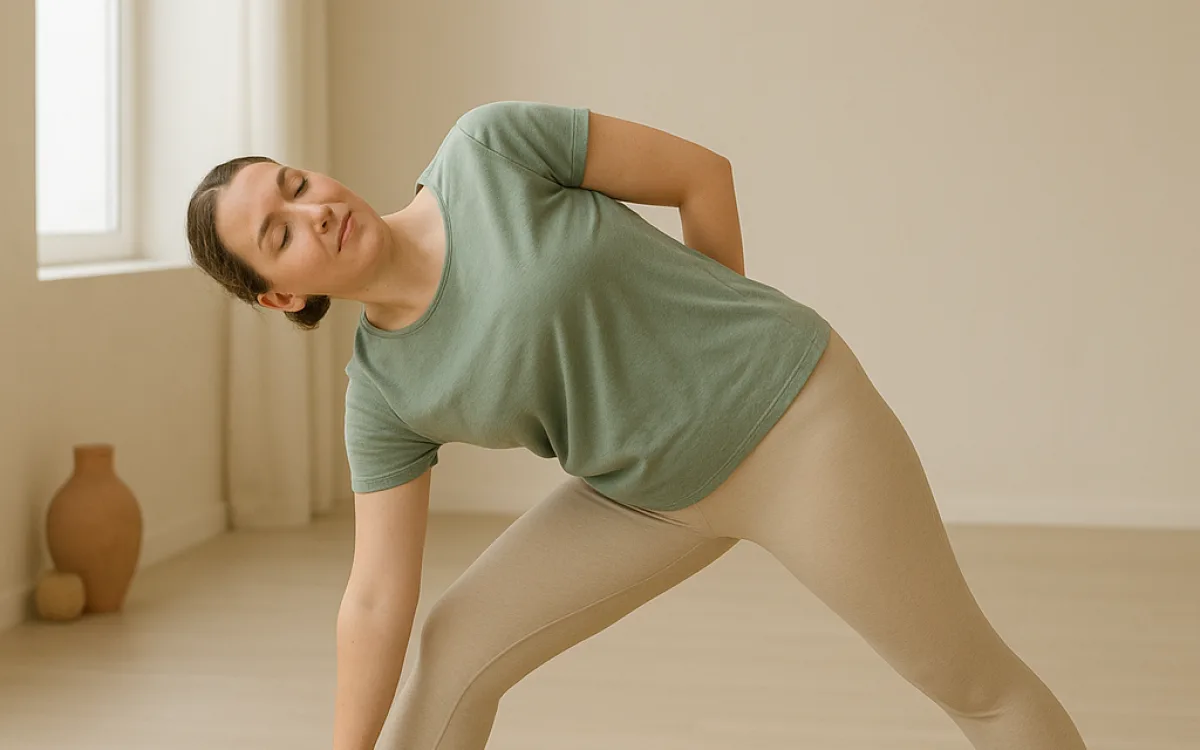
- Under the hands in triangle, half moon and standing forward folds, so the back does not round.
- Under the sacrum in bridge, turning an active pose into a passive restorative one.
- Between the thighs in bridge and plank to teach the legs to engage.
- Under the knee or thigh in seated poses where the hip will not settle.
- Under the back heel in warrior I when the ankle will not allow it down.
Cork is heavier, more stable and does not compress. Foam is lighter, cheaper and softer under a bony part. Two of either is more useful than one of the best. Two thick hardback books do about eighty per cent of the job.
The rest of the kit, ranked by usefulness#
| Prop | What it does | Household substitute |
|---|---|---|
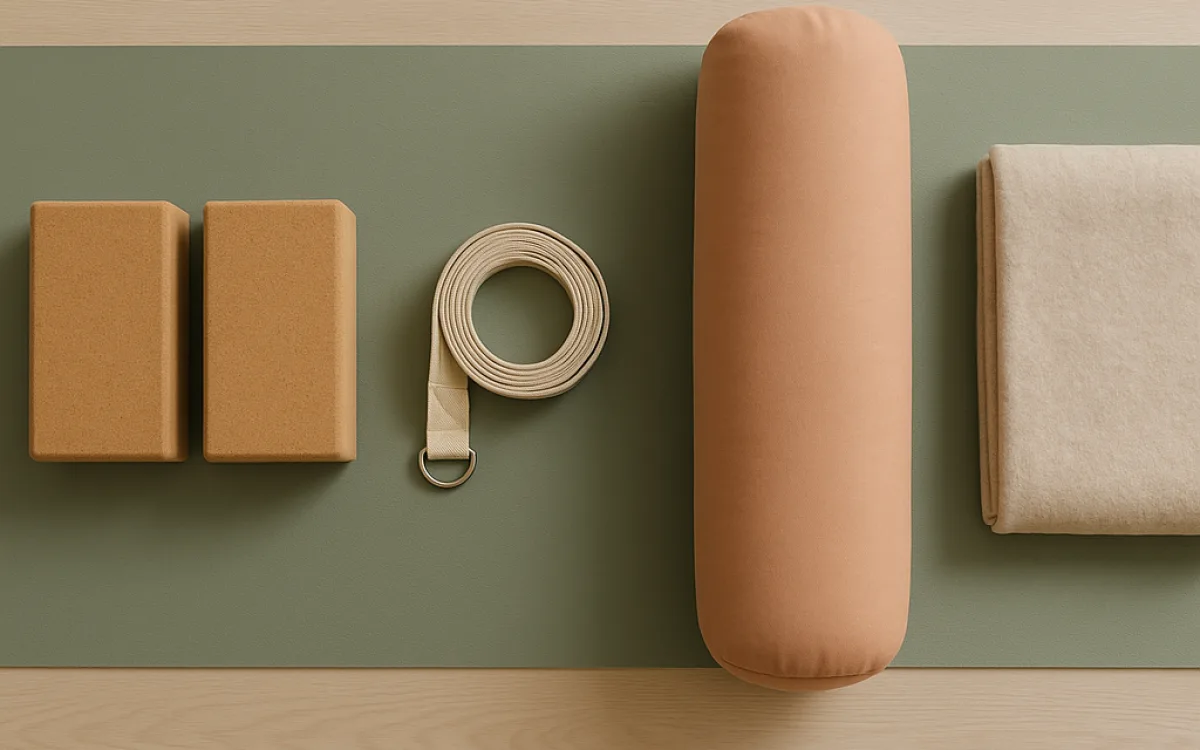
| 2 blocks | Brings the floor closer in standing and seated poses | Two thick hardback books |
| Strap | Extends your reach without rounding the spine | A dressing gown belt, a scarf, a long towel |
| Blanket | Sits under the hips, knees, head; covers you in savasana | Any folded blanket or bath towel |
| Bolster | Full support in restorative and yin poses | Two firm bed pillows, or a rolled duvet |
| Wheel | Deep backbends | Nothing. Skip it for the first year at least |
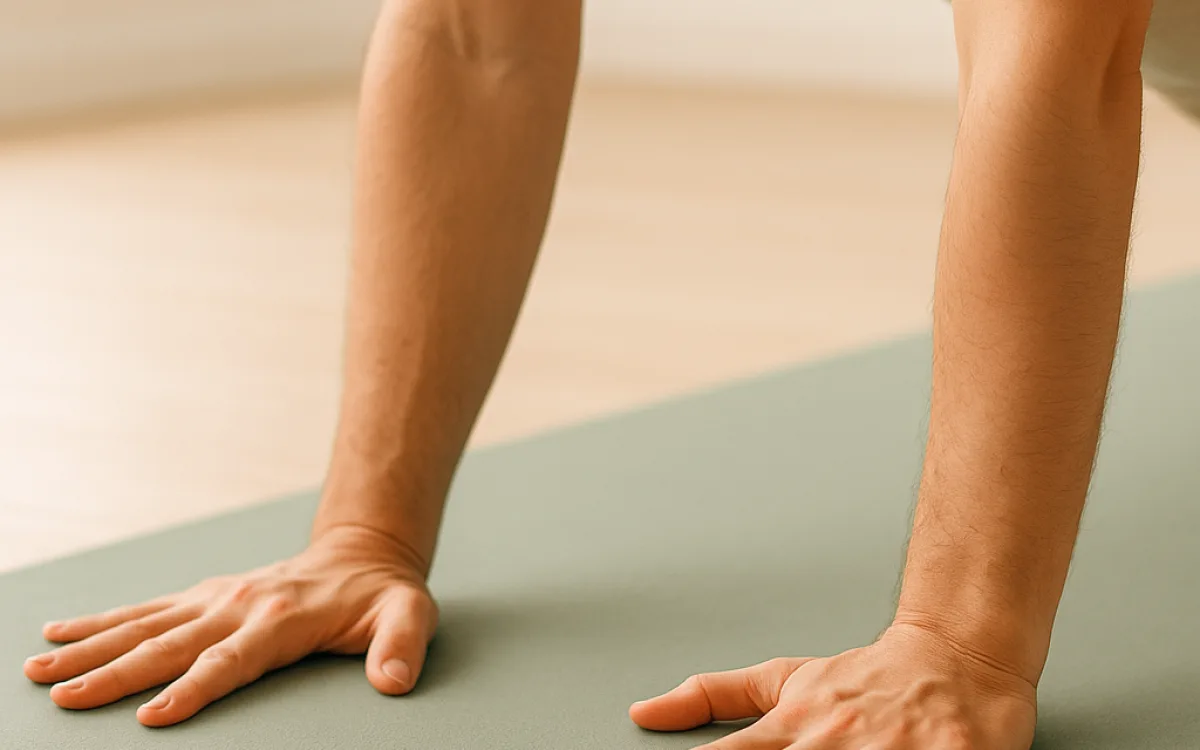
| Blocks for wrists (wedge) | Reduces the wrist angle | Roll the front edge of your mat under your palms |
Using a strap properly#
The strap is the most misused prop, because people use it to pull themselves further into a stretch. It is for the opposite: keeping length in the spine when the hands cannot reach.
- In a seated forward bend, loop it around the soles of the feet and hold it with straight arms. Sit up tall first, then fold from the hips.
- In reclined hamstring stretches, loop it around the foot so the shoulders stay on the floor.
- In shoulder openers, hold it wide between the hands rather than clasping the fingers behind the back.
- Never pull hard enough that the shoulders lift or the back rounds. If that is happening, hold the strap further from the foot.
What to skip, and why#
- Yoga wheels: designed for deep backbends and useful mainly to people who already have that range. High potential to over-extend a lower back.
- Inversion stands and yoga swings: a specialist purchase with a real injury profile. Not a beginner item.
- Gloves and grip socks: an attempt to solve a mat problem with an accessory. Fix the mat.
- Weighted blankets for savasana: pleasant, unnecessary, and a folded blanket does the same thing.
- Anything you saw in a single class and have not used since. Rent or borrow before buying.
The reasonable first-year kit#
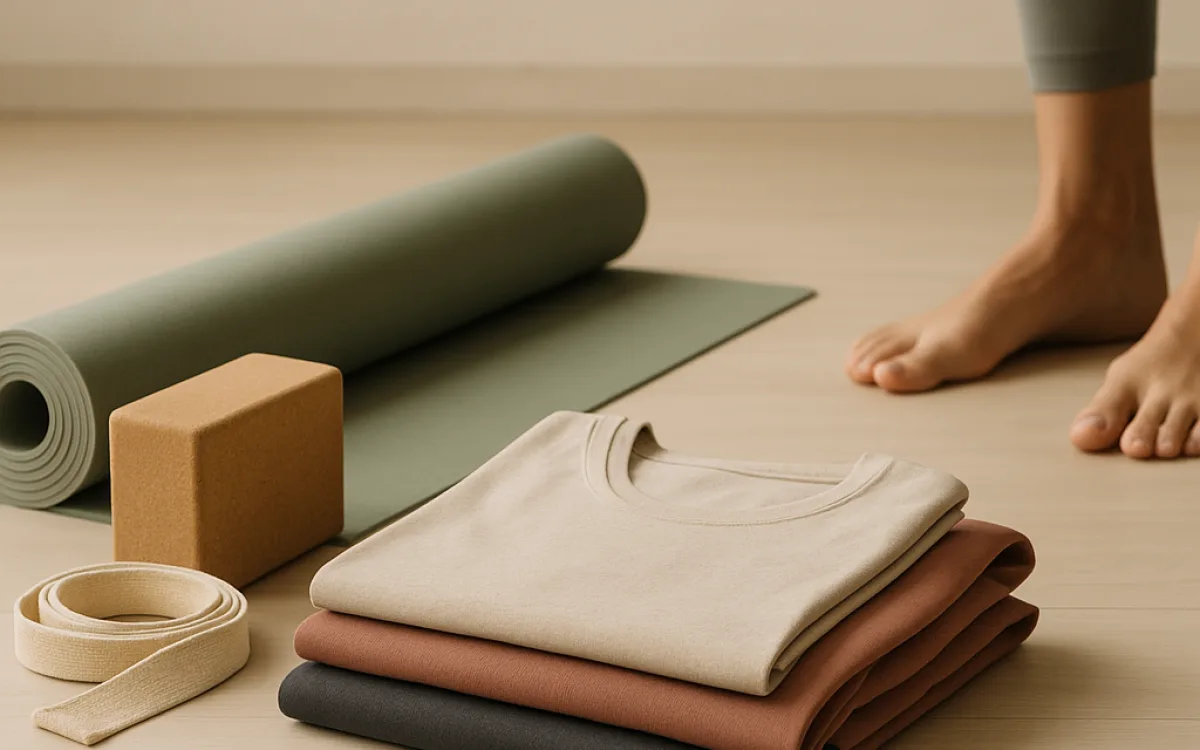
For a home practice, this is the whole list, and much of it can come out of a cupboard: a mat with real grip, two blocks or two thick books, a strap or a belt, one folded blanket and two firm cushions. That covers every pose in beginner yoga, every restorative shape, and most of a yin class. The next purchase after that should be a class, not a prop.
Frequently asked questions
Do beginners need yoga blocks?
Not strictly, but they help more than any other purchase and they help immediately. A block under the hand in triangle or a standing forward fold lets you keep a long spine instead of rounding to reach the floor, which is the difference between practising the pose and approximating it. Two thick hardback books work perfectly well until you decide to buy.
What can I use instead of a yoga bolster?
Two firm bed pillows stacked, a tightly rolled duvet, or a sofa cushion with a folded blanket on top. The requirement is that it is firm enough not to flatten under your weight and long enough to support your whole torso. A soft pillow that collapses is worse than nothing, because your body ends up holding itself up anyway.
Are props a sign that you are not good at yoga?
No, and the belief is worth discarding early because it costs beginners the most. Iyengar yoga, which is the most technically rigorous of the major styles, uses props constantly and at every level. A prop changes where a pose happens so the intended part of the body does the work. Refusing one usually means doing a different, worse pose.
yoga props for beginnersyoga blocks how to useyoga strap usesbolster substitutedo i need yoga blocksyoga equipment beginner