How to Choose a Yoga Mat: Grip, Thickness and What to Ignore
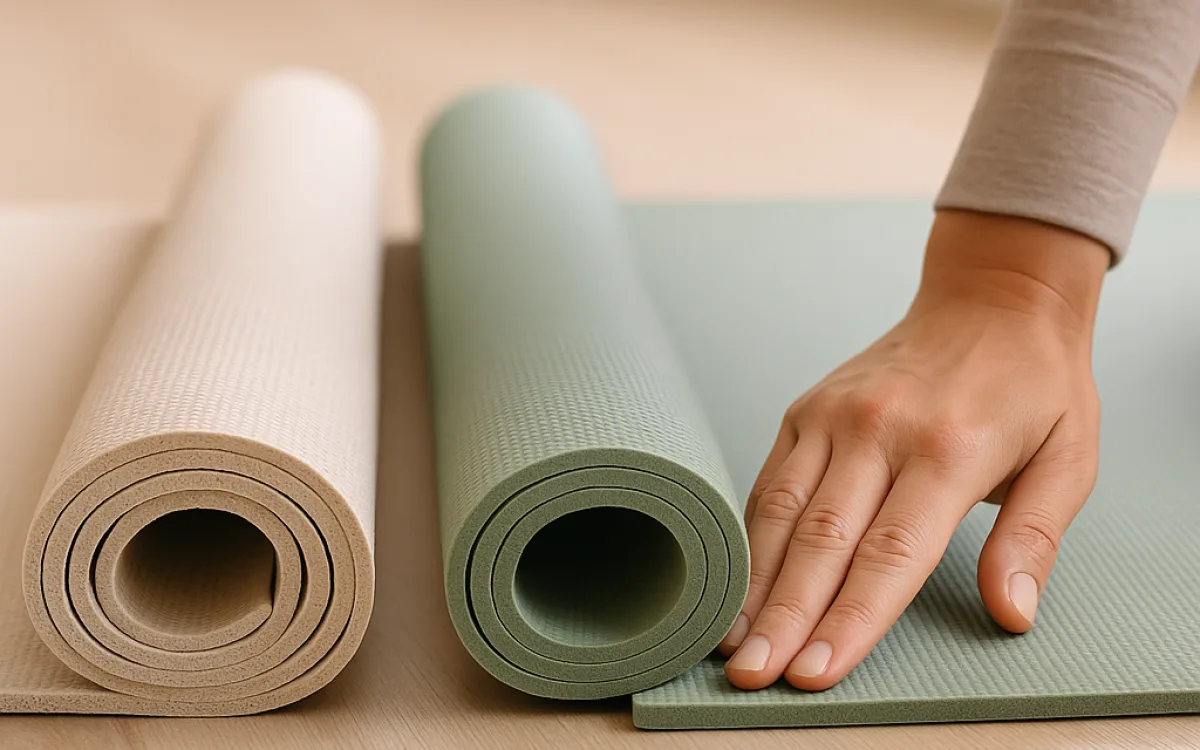
A yoga mat is the only purchase a beginner genuinely needs, and it is worth about ten minutes of thought — mostly because grip is a safety issue rather than a comfort one.
Everything else on the packaging is either a trade-off you should understand or marketing you can ignore.
Grip is the only non-negotiable#
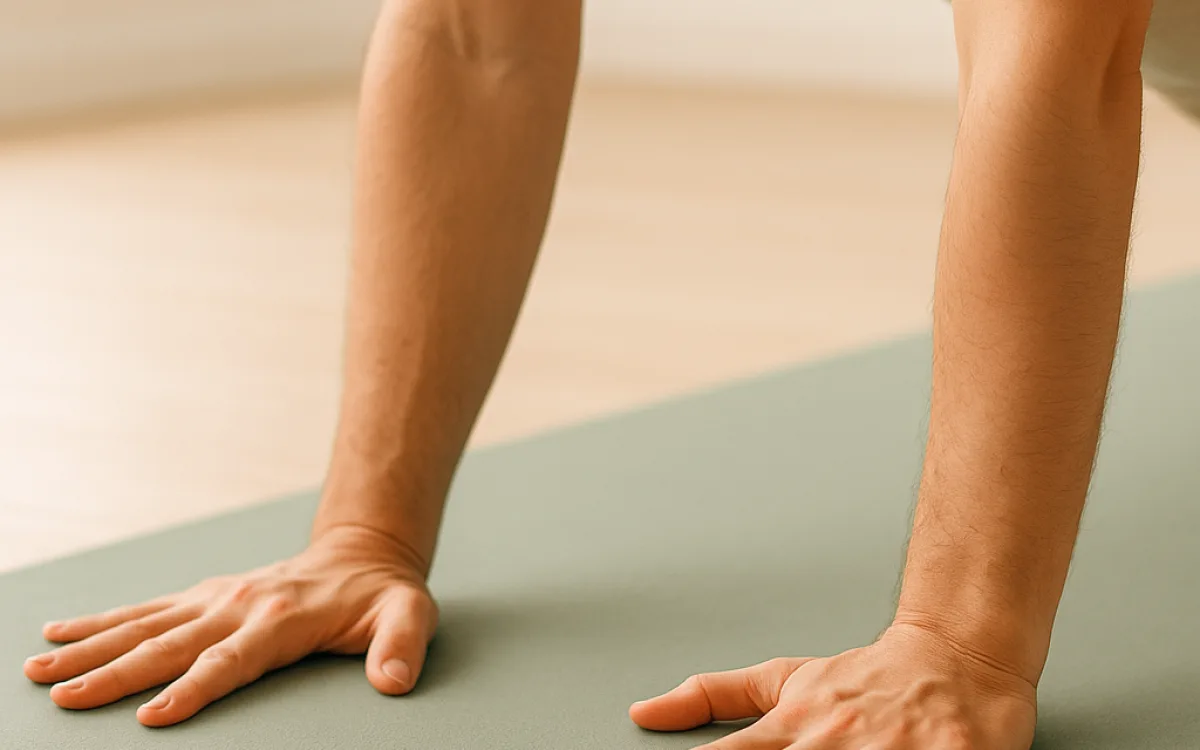
Hands sliding forward in downward dog is the single most common cause of wrist and shoulder strain in beginners, and it is entirely a mat problem. A mat that slips teaches you to grip harder, which is exactly the wrong habit.
- Natural rubber grips best, wet or dry, and is what most studios use. It has a strong smell for the first fortnight and degrades in direct sunlight.
- PVC is durable and cheap, grips well when dry and poorly when damp. Recyclable only in limited schemes.
- TPE is lighter and less smelly than rubber, with moderate grip and a shorter lifespan.
- Cork surfaces get grippier as they get damp, which suits people with sweaty hands and warm rooms.
- Suede and microfibre tops need to be damp to grip at all. Excellent for hot yoga, poor for everything else.
If you have a mat that slips and cannot replace it yet, a folded damp towel under the hands solves the problem entirely for a few pounds.
Thickness is a trade-off, not a quality level#
| Thickness | Good for | Bad for |
|---|---|---|
| 1 to 2 mm (travel) | Packing small, hard floors under a second mat | Knees, everything else |
| 3 to 4 mm (standard) | Balance, standing poses, general use | Kneeling on a hard floor without a blanket |
| 5 to 6 mm | Sensitive knees, restorative and yin, hard floors | Standing balances — the surface moves under you |
| 8 mm and above | Floor work and pilates | Any standing pose; genuinely unstable |
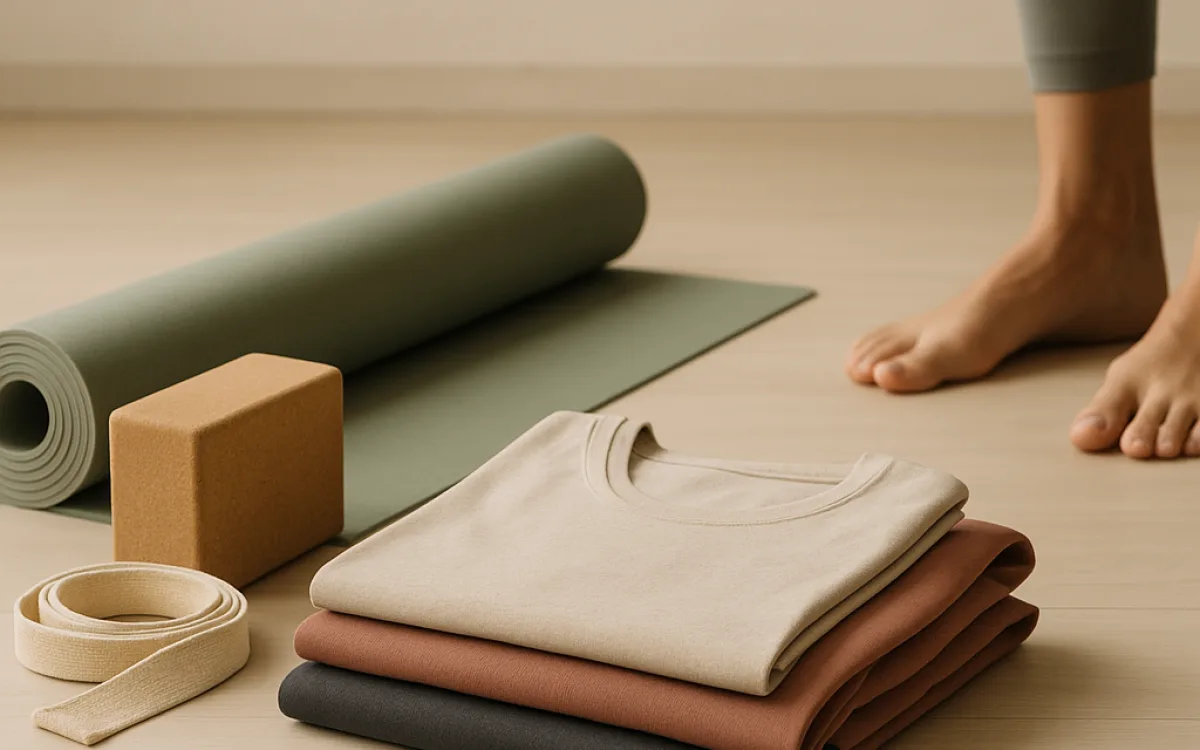
Standard 4 mm plus a folded blanket under the knees when needed beats a thick mat for almost everyone. The blanket is free and the balance is better.
What the price actually buys#
Between a budget mat and a premium one, most of the difference is longevity and consistency rather than immediate performance.
- Durability. A cheap mat flakes, dents permanently and loses grip within a year of frequent use; a good one lasts five.
- Consistent grip when damp, which is where budget mats fail first.
- Weight, which matters only if you carry it to classes.
- Closed-cell surfaces that do not absorb sweat, and are therefore far easier to keep clean.
- Not, in general, comfort — that comes from thickness, which is cheap.
A reasonable first mat costs modestly and is entirely adequate for a year of home practice. Buying an expensive mat before you know whether you will keep practising is a way of buying commitment, and it does not work.
Size, and why it matters more than you think#
Standard mats are around 173 cm long, which is short for anyone over about 180 cm — in downward dog your hands or feet end up on the floor, which is where the sliding starts. Longer mats at 183 cm and above are widely available and worth seeking out if you are tall. Wider mats at 66 cm and above are useful for broad shoulders and for anyone practising at home who does not need to fit into a packed studio.
Looking after it#
- Wipe it down with water and a drop of mild soap after sweaty sessions; let it dry flat or hanging, not rolled.
- Avoid essential-oil cleaning sprays on rubber mats — oils degrade the surface and destroy the grip.
- Keep it out of direct sunlight and hot cars, both of which age rubber quickly.
- Roll it with the top surface facing out, so the edges lie flat rather than curling up at the corners.
- Break in a new rubber mat with a light scrub and a couple of sessions. The slipperiness of a brand new mat is usually a surface residue and passes.
Frequently asked questions
What thickness of yoga mat is best for beginners?
Four millimetres for almost everyone. It gives enough cushioning for most poses while keeping you stable in standing and balancing poses, which is where thicker mats cause problems. If your knees are sensitive, keep the 4 mm mat and fold a blanket or towel under the knees for kneeling poses — that is better than a thick mat, and cheaper.
Are expensive yoga mats worth it?
For frequent practice, eventually yes — mainly for durability and for grip that holds up when the mat is damp. For a beginner in the first year, a modestly priced mat with good grip is entirely adequate, and the money is better spent on classes. Grip is the one specification worth paying for; everything else on the packaging can wait.
Can I use a regular exercise mat for yoga?
You can, but it is usually the wrong tool. Fitness and pilates mats are thicker, softer and designed for floor work, which makes standing balances noticeably unstable, and many have a smooth surface with poor grip under the hands. If it is what you have, use it for floor and restorative practice and put a towel under your hands for standing poses.
how to choose a yoga matbest yoga mat for beginnersyoga mat thicknessyoga mat gripcork yoga matyoga mat buying guide