10-Minute Morning Yoga Routine for Beginners

A morning body is a different body. Discs are more hydrated after a night lying down, which makes deep forward folds and twists a poor first move, and everything from the ankles up is stiffer than it will be by noon.
This sequence is built for that. Nothing in it requires you to be warm, and none of it demands range you do not have at seven in the morning.
The sequence#
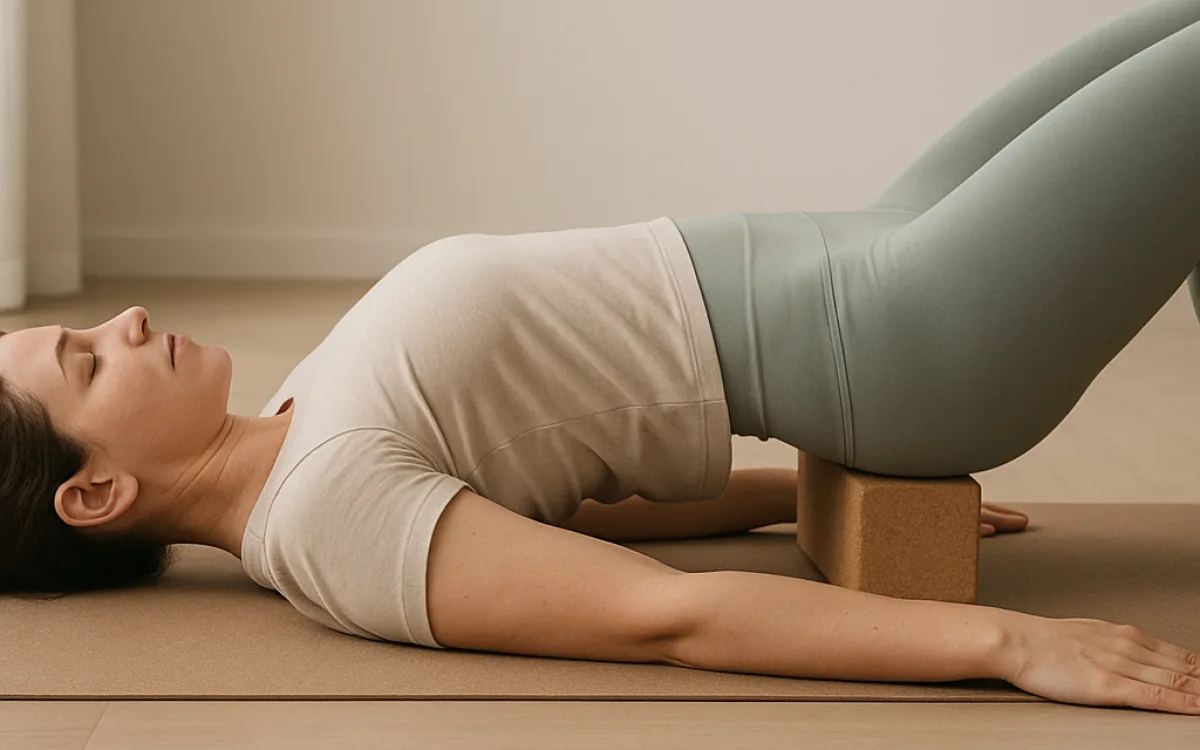
- Lying on your back, knees bent, one minute of slow breathing with a longer exhale. Do not skip this — it is what makes the rest of the ten minutes feel different from exercise.
- Knees to chest, then small circles with the knees, one minute. This is the gentlest possible way to wake the lower back.
- Roll onto hands and knees. Cat-cow, ten slow rounds, matching the movement to the breath.
- Thread-the-needle, one minute each side, for the upper back and shoulders.
- Downward dog with generously bent knees, five breaths. Pedal the feet slowly.
- Low lunge, one minute each side, back knee down on a folded blanket. The front of the hip is the tightest thing you own after a night in bed.
- Standing forward fold with soft knees, five breaths, then roll up slowly one vertebra at a time.
- Mountain pose, arms overhead, three breaths. Finish standing and go about your day.
Why the order is what it is#
The sequence moves from lying, to hands and knees, to standing, and from small movements to larger ones. That is not decorative — it is the safest progression for a body that has been horizontal for eight hours.
- Spinal discs absorb fluid overnight and are at their most pressurised in the first hour after waking. Deep flexion and rotation are best delayed.
- Small, repeated movements rehydrate and lubricate joints more effectively than a single long stretch.
- Weight-bearing comes late, once the shoulders and wrists have had gentler work first.
- Ending standing, rather than lying, means the practice hands you to the rest of the day rather than back to bed.
If you wake with a stiff or sore lower back, spend two minutes on the knee circles and skip the standing forward fold entirely for the first few weeks.
If you only have five minutes#
| Time | Do this | Skip this |
|---|---|---|
| 5 minutes | Breathing, knee circles, cat-cow, low lunge | Downward dog, forward fold |
| 10 minutes | The full sequence above | Nothing |
| 15 minutes | Add warrior II and a supine twist at the end | Nothing |
| Very stiff morning | Double the cat-cow and knee circles | Anything standing until you feel warmer |
A five-minute version done daily is worth far more than a fifteen-minute version done twice a week. This is the whole argument for a morning practice: it is the session least likely to be displaced by the day.
Making it stick#
- Leave the mat unrolled overnight, in the room you will be in first.
- Attach it to something you already do without deciding — after brushing your teeth, before the kettle boils.
- Set the bar embarrassingly low: the commitment is to stand on the mat, not to complete the sequence.
- Do it in whatever you slept in. Getting changed is a decision, and decisions are where habits die.
- Keep the same sequence for a month. Novelty is the enemy of a morning routine.
What to expect#
In the first week the main effect is that you feel less stiff by mid-morning. By week three most people notice they are reaching for the sequence on bad-sleep days rather than skipping it. Measurable flexibility change takes six weeks or so, and by then the routine is usually no longer something you have to remember to do.
Frequently asked questions
Is it better to do yoga in the morning or evening?
Morning practice is stiffer but far more consistent, because fewer things can push it aside. Evening practice moves better and suits winding down, but is the first casualty of a long day. For building a habit, morning wins. For flexibility work specifically, evening is slightly more productive because the body is warm. Many people end up with a short morning routine and a longer evening session once or twice a week.
Should I do yoga before or after breakfast?
Before, or at least an hour after eating. Twists and forward folds on a full stomach are uncomfortable, and a light body simply moves better. If you feel lightheaded practising fasted, half a banana or a few sips of something sweet beforehand solves it without making you full.
Is 10 minutes of morning yoga actually worth it?
Yes, and more than most people expect. Ten minutes daily gives you seventy minutes a week of consistent mobility work at the time of day when your body is stiffest — which is precisely when the input is most valuable. It will not build much strength, but for stiffness, back comfort and how you feel by mid-morning it is one of the highest-return ten minutes available.
10 minute morning yoga routinemorning yoga for beginnersshort yoga routineyoga before breakfastmorning stretch routinedaily yoga habit