Yoga Poses for Flexibility: What Actually Changes Range
Flexibility is the reason most people try yoga and the thing they go about most inefficiently. The instinct is to push further into a stretch and hold on grimly, which produces very little range and a fair amount of irritation.
What actually changes range is more boring, more gradual, and considerably more effective.
Why you are tight, and why pushing harder does not help#
For most beginners, the limit on range is not short muscle tissue. It is the nervous system deciding that further is unsafe and increasing tension protectively. That is why range improves within a single session, then reverts by the next day — nothing structural changed, the guard simply relaxed for a while.
- Short-term gain within a session is nervous-system tolerance, not tissue length.
- Lasting change comes from repeated, unthreatening exposure — frequent, moderate, relaxed.
- Pain triggers the protective response, so a painful stretch actively works against what you want.
- Breathing calmly during a hold is not a mood; it is the signal that tells the nervous system it can stand down.
The useful sensation is a firm, spread stretch you could hold while having a conversation. Sharp, pinching or shaking means you are past the point of benefit.
Six poses that give the most range#
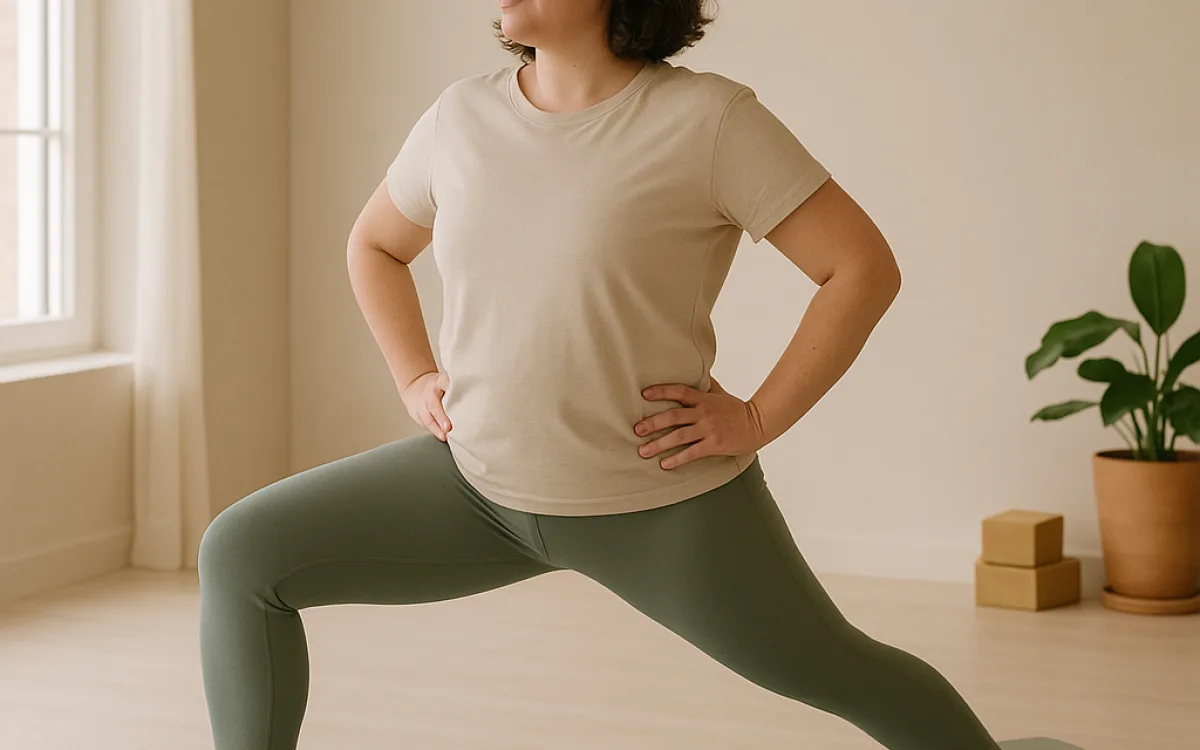
- Low lunge for the hip flexors — the front of the hip is the tightest thing about most desk-bound bodies, and it changes fast.
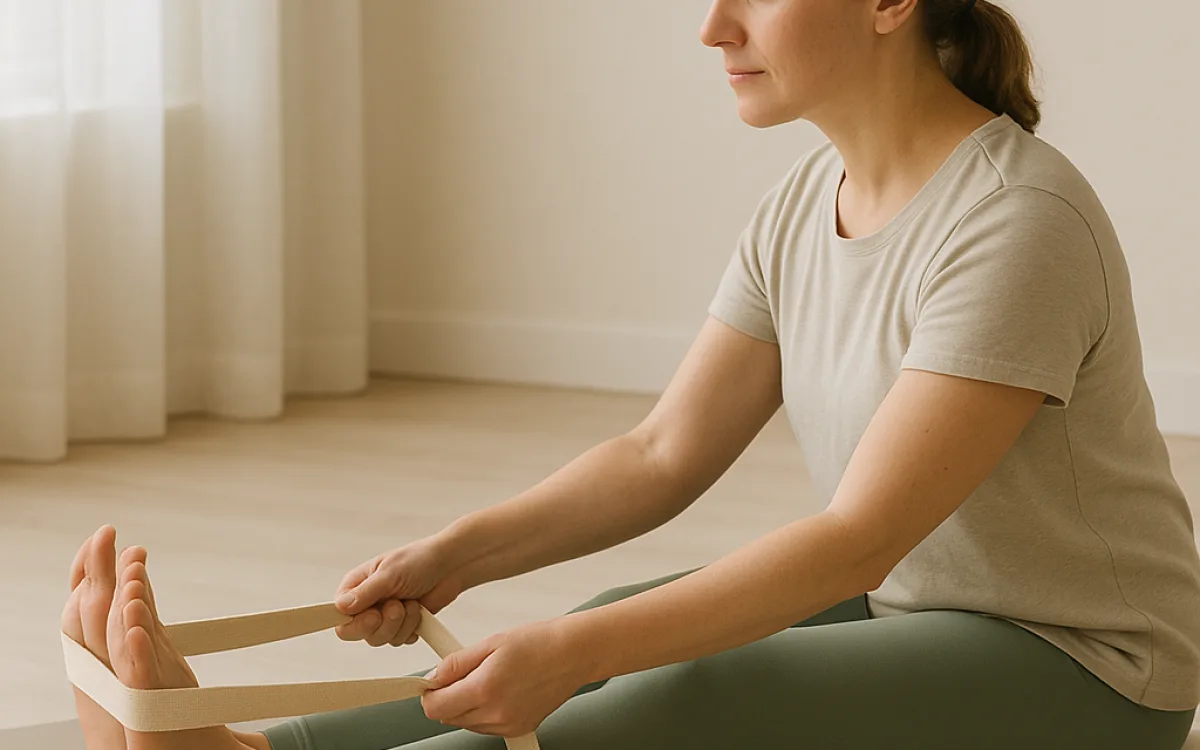
- Seated forward bend with a strap for the hamstrings, sitting on a folded blanket so the pelvis can tip.
- Butterfly pose for the inner thighs and hips, supported forward on cushions so nothing has to be held.
- Thread-the-needle for the upper back and shoulders, which relieves more neck stiffness than direct neck stretching does.
- Sphinx pose for spinal extension, which counteracts a day spent rounded forward.
- Reclined figure four for the outer hip and glutes, which is where a lot of apparent hamstring tightness actually lives.
Notice how many are done lying or sitting with support. Passive, supported positions produce more lasting change than standing ones you have to hold up.
How long to hold, and how often#
| Approach | Hold | Frequency | Best for |
|---|---|---|---|
| Dynamic, moving in and out | 5 to 10 repetitions | Daily | Warming up, morning stiffness |
| Active hold | 30 to 60 seconds | 3 to 5 times a week | General mobility |
| Long passive hold (yin style) | 2 to 5 minutes | 2 to 3 times a week | Deep hip and connective tissue change |
| Post-exercise stretching | 30 seconds | After training | Comfort, not range |
Frequency beats duration here as everywhere else in beginner yoga. Ten minutes on five days changes more than fifty minutes on one.
A realistic timeline#
Knowing when to expect change stops you from concluding it is not working during the weeks when it is quietly working.
- Session 1 to 3: noticeably more range within each session, gone by the next day. Normal.
- Week 2 to 3: the starting point of each session is slightly better than it was.
- Week 6: measurable change — hands lower in a forward fold, a deeper lunge without strain.
- Month 3 to 6: range that persists without practice for a week or two.
- Beyond that: slow, steady, and highly dependent on genetics and joint structure, which do not negotiate.
What not to do#
- Do not bounce. Ballistic stretching triggers exactly the protective response you are trying to reduce.
- Do not stretch a cold body hard. Two minutes of movement first changes everything.
- Do not compare joint ranges with other people. Hip socket depth and shape vary enormously and are not trainable.
- Do not chase a specific pose. Chasing the splits or a full forward fold is where beginners get hurt.
- Do not stretch through pain in a joint. Muscle stretch is a spread sensation; joint pain is sharp and local.
Frequently asked questions
How long does it take to become flexible with yoga?
Within a session you will feel more range immediately, though it fades by the next day — that is nervous-system tolerance rather than tissue change. Genuine, measurable improvement takes about six weeks of regular practice, and range that persists without practising takes three to six months. The ceiling is individual, because joint shape varies enormously and is not trainable.
Is it better to hold a stretch or move in and out of it?
Both, for different purposes. Moving in and out of a shape five to ten times is the better way to warm up and to relieve morning stiffness. Longer holds of thirty seconds to several minutes are what produce lasting range. A practical structure is dynamic movement at the start of a session and longer passive holds at the end, when the body is warm and you are ready to be still.
Does stretching every day help or hurt?
Daily gentle mobility helps and is one of the best habits available. What does not help is daily maximal stretching — pushing to your absolute limit every day keeps the protective tension elevated and can irritate tendons. Practise most days at a comfortable intensity, and go deeper only once or twice a week.
yoga poses for flexibilityyoga for stiff bodyhow to become flexiblehamstring stretch yogahip flexibility beginnerhow long to hold a stretch