Sun Salutation Step by Step: A Beginner Version That Works
Sun salutation is the sequence every class assumes you know and almost no class teaches slowly. It is also where beginners meet chaturanga, the low push-up position, which is the most commonly injured shape in modern yoga.
The version below removes it. You lose nothing that matters in a first three months, and you avoid the shoulder problem entirely.
The beginner sequence, step by step#
- Stand in mountain pose, feet hip width, arms by your sides. Take one full breath here before you start.
- Inhale and sweep the arms out and up overhead. Keep the ribs from flaring — the lift comes from the shoulders, not the lower back.
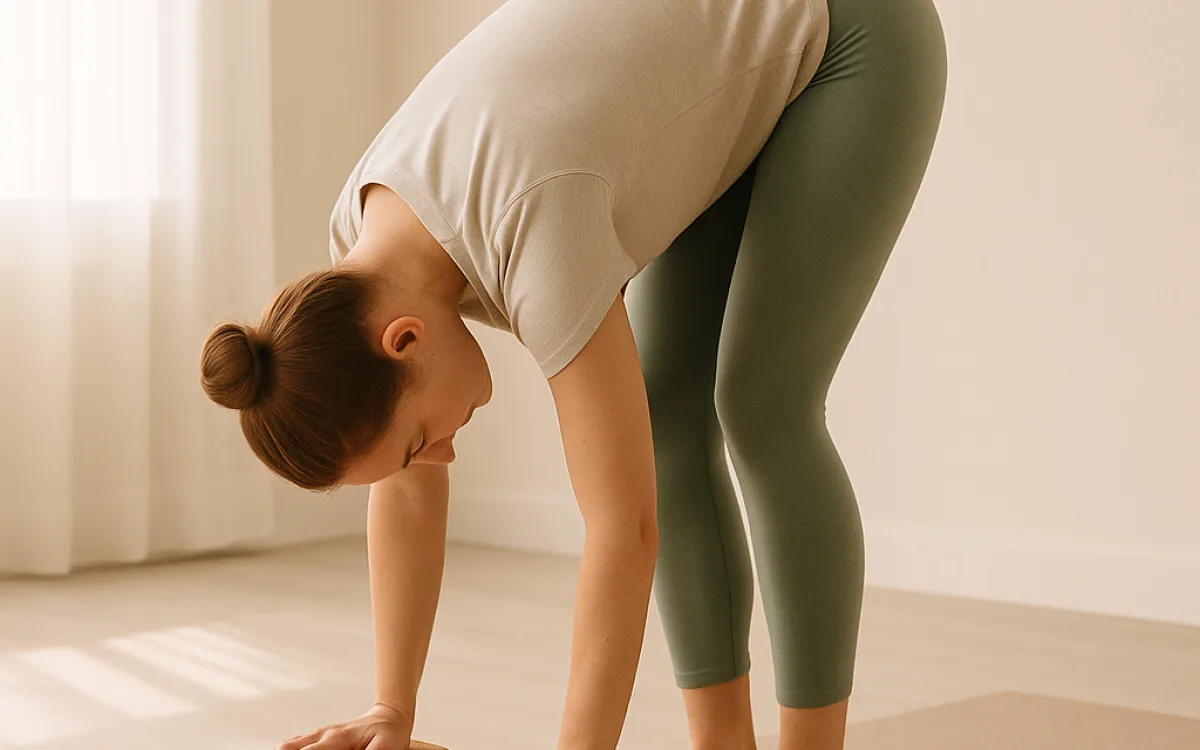
- Exhale and fold forward with the knees clearly bent, hands to the shins, the floor or two blocks.
- Inhale and lift halfway up, hands on the shins, back long and flat. This is the step that teaches you a neutral spine.
- Exhale, bend the knees more and step or walk back to a plank position with the hands under the shoulders.
- Lower the knees to the floor, then lower the chest between the hands. Knees, chest, chin — this replaces chaturanga.
- Slide forward into a low cobra: hips down, chest lifting only a little, elbows bent and close to the ribs.
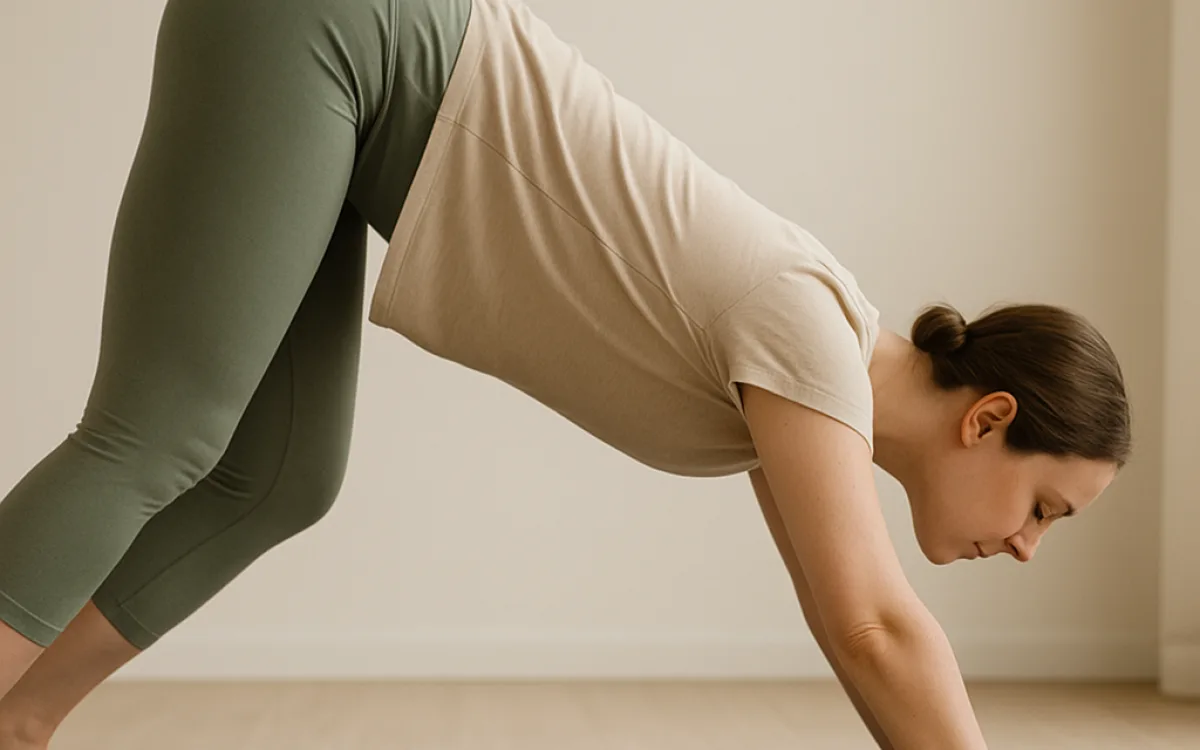
- Tuck the toes, press back to downward dog with bent knees, take three breaths, then walk the feet forward and stand up.
Why we take chaturanga out#
Chaturanga — lowering from plank to a hover with the elbows at ninety degrees — requires considerable shoulder and core strength, and in a flowing class it is performed dozens of times at speed. Done with the shoulders dropping below the elbows, it is the single most common source of shoulder complaints in yoga.
- Knees, chest, chin gives the same rhythm and shape with a fraction of the load.
- Lowering all the way to the floor and pressing back up is another honest alternative.
- If you want to learn chaturanga eventually, practise it separately and slowly, not thirty times inside a flow.
- Nobody in a class will notice, and any teacher worth attending will approve.
The test for chaturanga readiness is simple: can you hold a plank with a straight line from head to knees for forty-five seconds, breathing normally? If not, it is not time yet.
Matching breath to movement#
| Movement | Breath | Why |
|---|---|---|
| Arms sweep up | Inhale | Expansion movements open the chest |
| Fold forward | Exhale | Compression movements empty the lungs |
| Halfway lift | Inhale | Lengthening the spine wants space |
| Step back to plank | Exhale | Effortful transitions go on the out-breath |
| Low cobra | Inhale | Opening the chest |
| Back to downward dog | Exhale | Settling into a hold |
If the breath cannot keep up, the sequence is too fast. Slow the movement to match the breath, never the reverse — that rule is most of what separates yoga from calisthenics.
How many rounds, and how fast#
- Start with three rounds, slowly, with a pause in downward dog each time.
- Build to five rounds over a month. Five slow rounds is a complete warm-up and a reasonable standalone practice.
- Alternate the leading leg each round if your version steps back one foot at a time.
- Pause whenever the breath becomes ragged. The sequence is a warm-up, not a test.
Common problems and their fixes#
| Problem | Fix |
|---|---|
| Dizzy on standing up | Come up more slowly; roll up through the spine and lift the head last |
| Lower back aches in cobra | Lift much less; keep the hips heavy and the elbows bent |
| Wrists sore by round three | Fewer rounds, blocks under the hands, or come to fists in plank |
| Cannot step back smoothly | Walk one foot back at a time. Jumping is decorative |
| Hamstrings scream in the fold | Bend the knees much more; hands on blocks |
Frequently asked questions
What is the point of sun salutation?
It is a warm-up sequence that takes the spine through flexion, extension and weight-bearing, gets the shoulders working and raises the body temperature in a few minutes. Because it repeats, it also trains the link between movement and breath faster than isolated poses do. Practically, it is the sequence most classes open with, so knowing it means you spend the first ten minutes of any class moving rather than watching.
Can beginners skip chaturanga?
Yes, and most should for the first several months. Substituting knees, chest, chin — or simply lowering all the way down and pressing back up — keeps the rhythm of the sequence with a small fraction of the shoulder load. Chaturanga performed repeatedly with the shoulders dropping below the elbows is the most common cause of shoulder complaints in yoga.
How many sun salutations should a beginner do?
Three slow rounds to start, building to five over a month. Five unhurried rounds with a pause in downward dog is a complete warm-up and works perfectly well as a short standalone practice. Doing twenty rounds quickly is a cardio workout with a yoga name on it, and it is where form falls apart.
sun salutation step by stepsurya namaskar for beginnersbeginner sun salutationchaturanga alternativeyoga warm up sequencevinyasa for beginners