Hatha Yoga for Beginners: The Safest Place to Start
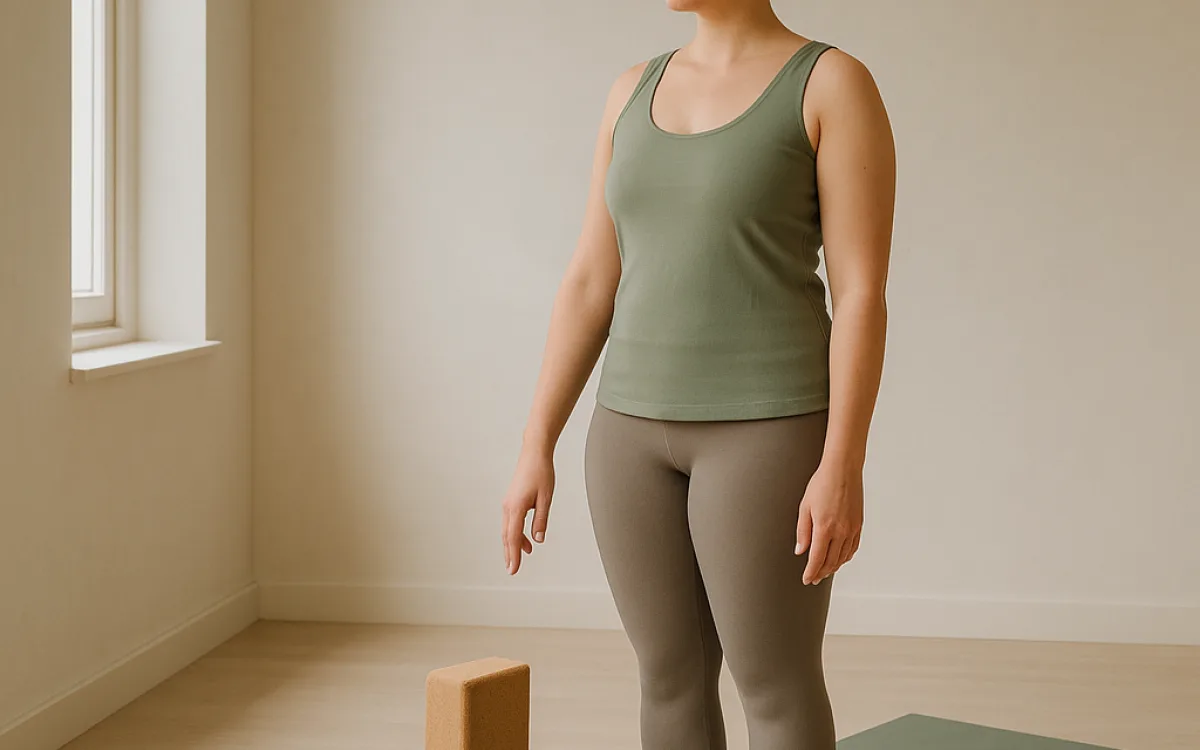
If you ask a yoga teacher which style a complete beginner should start with, most will say hatha without hesitating. It is not because hatha is the best style. It is because it is the one where you have time to hear the instruction, look down at your own feet, and adjust before the class has moved on.
That single feature — time — is worth more in a first three months than anything another style offers.
What hatha actually means on a timetable#
Historically hatha describes the whole physical branch of yoga, which makes the word almost meaningless as a label. On a modern studio timetable it has a specific and reliable meaning: a class that holds poses rather than flowing between them.
- Poses held for five breaths or more, with a pause between them.
- Instruction spoken while you are in the shape, not while you are moving into the next one.
- No continuous choreography to memorise or fall behind in.
- Props used routinely rather than offered as an afterthought.
- Usually 45 to 75 minutes, at a moderate temperature.
Class names vary enormously between studios. Foundations, level 1, gentle, basics and slow flow are all close relatives, and any of them will do.
Why it suits beginners specifically#
The advantage is not that hatha is easy. Holding warrior II for eight breaths is not easy. The advantage is that the format matches how beginners actually learn.
- Motor learning needs time in the shape. A pose held for five breaths gives your nervous system something to map; a pose passed through in one breath does not.
- You can look at your own alignment, which is impossible when you are trying to keep up.
- Corrections land, because the teacher can see you standing still and you can act on what they say.
- Injury risk is lower, because nothing is done at speed and nothing is done tired and rushed.
What a class looks like, minute by minute#
| Stage | Roughly | What happens |
|---|---|---|
| Settling and breathing | 5 to 10 min | Seated or lying, slow breathing, sometimes a short intention |
| Warm-up | 10 min | Cat-cow, gentle mobility, perhaps a slow sun salutation |
| Standing poses | 20 to 25 min | Warriors, triangle, balances — held, with rest between |
| Floor poses | 10 to 15 min | Hips, twists, a gentle backbend |
| Savasana | 5 to 10 min | Lying still, often with a blanket |
Who hatha is not right for#
Being honest about this saves people a wasted term of classes they quietly dislike.
- If you want the workout feeling and a raised heart rate, hatha will frustrate you — try vinyasa.
- If your main goal is deep passive flexibility and calm, yin does that better.
- If you find stillness genuinely uncomfortable and prefer to keep moving, the pauses may feel long.
- If you are already fit and coordinated, you may find you can skip to a level 1 vinyasa after a few weeks rather than months.
Disliking a style is legitimate information, not a failure of discipline. The best style for you is very largely the one you will attend.
When to move on, and where to#
- Stay with hatha until you can name and enter the eight core poses without watching anyone.
- Then add one vinyasa class a week while keeping a hatha class — the flow will make sense because you know the shapes.
- Add yin in the evenings if flexibility and stress are your priorities.
- Keep at least one slow, held-pose class in your week permanently. Almost every experienced practitioner does, and it is where technique gets fixed rather than reinforced.
Frequently asked questions
What is the difference between hatha and vinyasa yoga?
Hatha holds poses with pauses between them and instruction given while you are in the shape. Vinyasa links poses in a continuous sequence, moving on each breath, with the instruction given as you move. Hatha builds understanding of each pose; vinyasa builds rhythm, stamina and heat. For a first three months hatha is the more efficient teacher, which is why almost every studio recommends it first.
Is hatha yoga a good workout?
It is a moderate one, and its strength is in the strength rather than the cardio. Holding warrior poses for five to eight breaths builds real leg and hip endurance, and standing balances build stability. What it does not do is raise your heart rate for a sustained period. If you want that from yoga, vinyasa or power yoga is what you are looking for.
How long should a beginner stay with hatha?
Until the basic poses are familiar enough that you can enter them without copying anyone — typically six to twelve weeks of regular attendance. There is no requirement to move on at all; many people practise hatha for years. What is worth avoiding is jumping to a fast flowing class in week two, which usually means learning the shapes badly at speed.
hatha yoga for beginnerswhat is hatha yogahatha vs vinyasabeginner yoga class typeslow yoga classbest yoga style for beginners