Vinyasa Yoga for Beginners: When You Are Ready to Flow
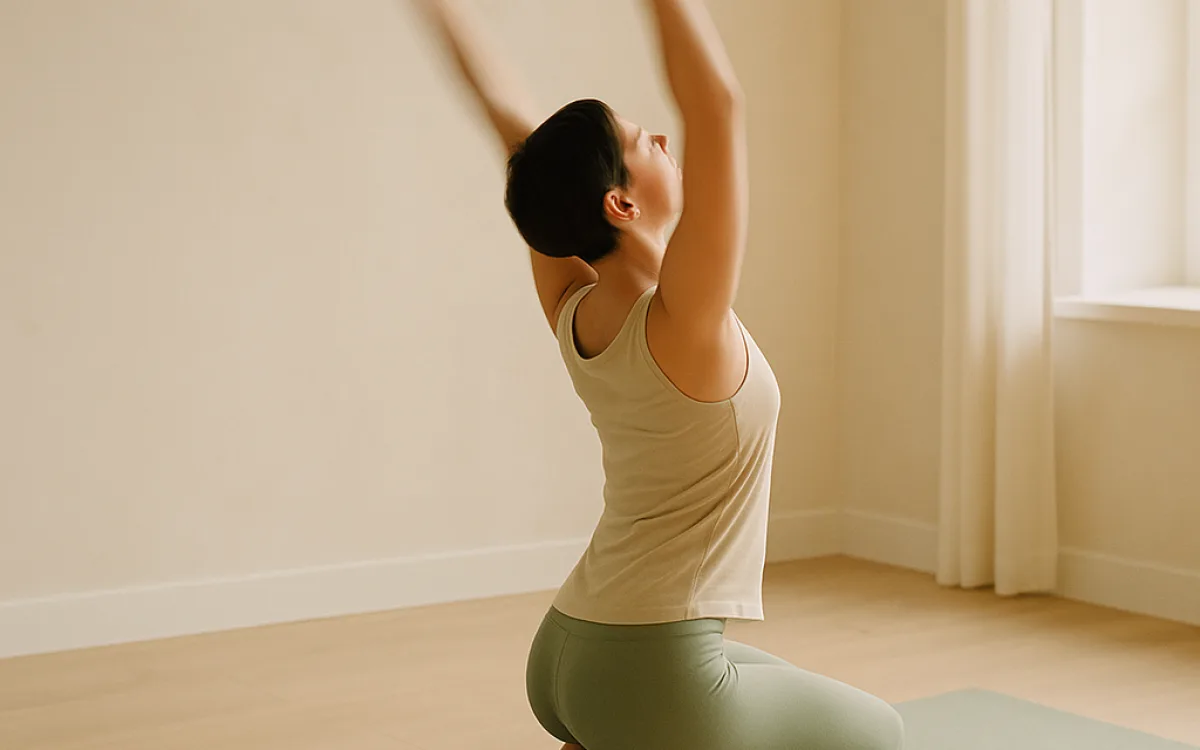
Vinyasa is the style most people picture when they imagine a yoga class, and it is the style most likely to put a beginner off yoga entirely.
Not because it is dangerous, but because in a flowing class nobody has time to correct you, and repeating a shape thirty times at speed is an extremely efficient way to learn it wrong.
What flowing actually means#
In vinyasa, each movement is linked to a breath and poses run continuously rather than being held separately. The sequence changes from class to class, which is part of the appeal and part of the difficulty.
- One movement per breath through the transitions, with occasional held poses.
- Sun salutations as a recurring structure, often many rounds.
- Chaturanga appearing repeatedly — the main technical risk of the style for beginners.
- A warm room and a raised heart rate, though not usually hot-yoga temperatures.
- Variable sequencing, so you cannot rely on knowing what comes next.
The readiness test#
Before a first vinyasa class, four things should be true. If three are, go. If fewer, another month of hatha will make the class enjoyable rather than bewildering.
- You can hold a plank with a straight line from head to knees for forty-five seconds, breathing normally.
- You can find downward dog without instruction and hold it for five breaths without wrist pain.
- You know warrior I, warrior II and a standing forward fold by name.
- You can breathe through your nose steadily while doing something moderately effortful.
The plank test is the one that matters most, because it is a proxy for whether chaturanga is going to be a movement or an uncontrolled collapse.
How to take a vinyasa class as a beginner#
- Take the knees-down version of chaturanga every single time. All of them. Nobody notices, and the alternative is thirty repetitions of the most commonly injured shape in yoga.
- Skip a round. When the class starts a third sun salutation and you are tired, stay in downward dog or child pose and rejoin at the next standing pose.
- Ignore the arm variations. If the teacher offers a bind or an arm balance, do the base pose better instead.
- Put your mat where you can see the teacher, not where you can see the most people to copy.
- Go to the same teacher repeatedly. Sequencing style varies enormously, and familiarity is what lets you stop guessing.
A good vinyasa teacher names modifications as they go. If a teacher offers only the full expression of everything, that is a class for people who already know the shapes.
What vinyasa is good at#
| Gives you | How well | Notes |
|---|---|---|
| Cardiovascular work | Moderate | The only common style that raises heart rate meaningfully |
| Upper body strength | Good | Largely from repeated weight-bearing on the hands |
| Stamina and heat | Very good | This is the point of the style |
| Precision of alignment | Poor | There is no time; this is what hatha is for |
| Deep flexibility | Moderate | Holds are short. Yin does this far better |
| Stress reduction | Good but different | Effortful rather than settling — poor choice late at night |
A sensible weekly mix#
Vinyasa works best as part of a week rather than as the whole of it. The pattern most experienced practitioners settle into looks something like this, and it is worth adopting early.
- One or two vinyasa classes for stamina, strength and enjoyment.
- One slower held-pose class where technique gets corrected rather than reinforced.
- One yin or restorative session, ideally in the evening.
- Short home practice on the remaining days, five to fifteen minutes, entirely gentle.
Frequently asked questions
Is vinyasa yoga suitable for beginners?
It can be, but usually not as a first class. Vinyasa moves continuously, which leaves no time for correction, and it repeats chaturanga many times per session. Four to eight weeks of a slower class first means you arrive knowing the shapes, which turns vinyasa from bewildering into enjoyable. Some studios run beginner vinyasa classes that are slow enough to be a reasonable starting point.
What does vinyasa mean?
It refers to linking movement to breath — one movement per breath — and by extension to a style built on continuous sequences rather than held poses. In practice, a class labelled vinyasa or flow means you will move more or less continuously for most of the session, with the sequence varying from class to class.
How do I keep up in a vinyasa class?
Do not try to. Take knees-down chaturanga every time, skip a round of sun salutations when you are tired by resting in downward dog or child pose, and ignore the optional arm variations. Rejoining at the next standing pose is completely normal, and every experienced person in the room does some version of it.
vinyasa yoga for beginnerswhat is vinyasa yogaflow yoga beginnerchaturanga for beginnersvinyasa vs hathayoga flow class