Your First Yoga Class: What Actually Happens
The reason a first class feels intimidating is almost never the yoga. It is not knowing where to put your shoes, whether people talk, and what happens when everyone folds forward and you cannot.
None of it is complicated, and all of it is easier when somebody tells you in advance.
Before you go#
- Book a class labelled beginner, foundations, gentle or level 1. If a timetable has none, email and ask which class suits a complete beginner — the answer tells you a lot about the studio.
- Arrive ten minutes early. Arriving on time means walking into a quiet room, which is the actual worst-case scenario people imagine.
- Eat lightly, and not in the hour before. Twists and forward folds on a full stomach are their own kind of lesson.
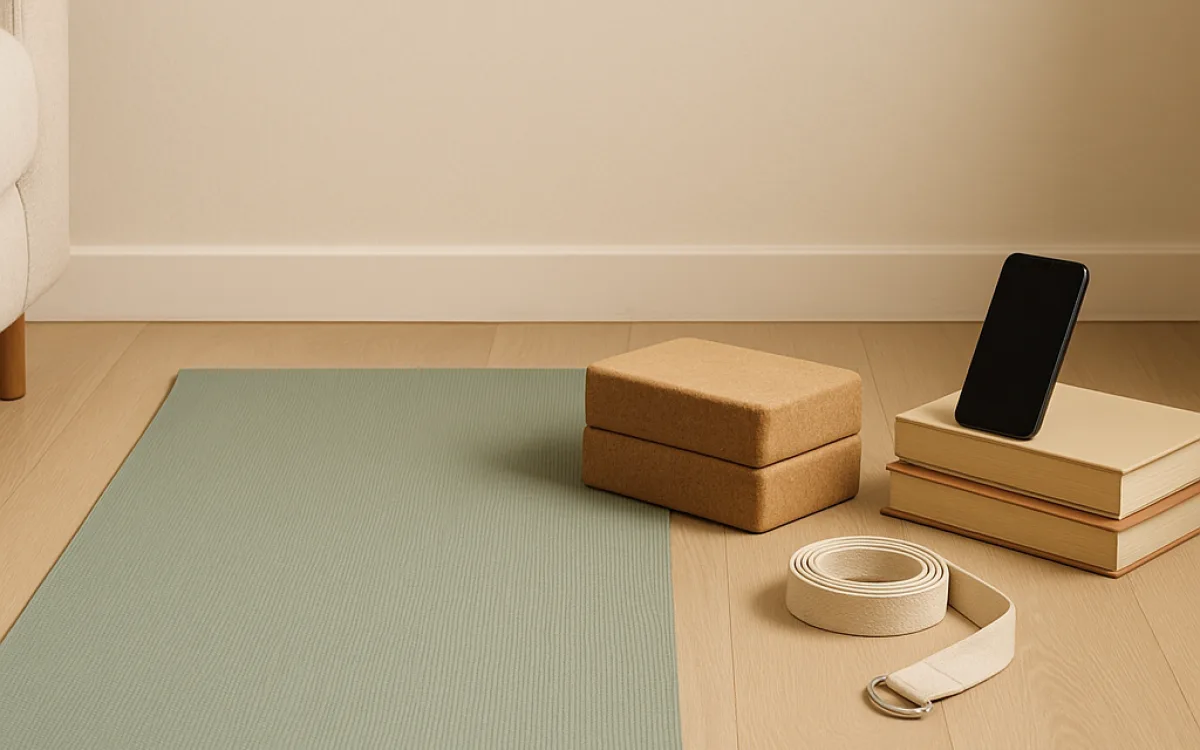
- Bring water, and a small towel if you tend to run warm. Most studios lend mats, blocks and straps.
- Tell the teacher, quietly, that it is your first class and mention any injury, pregnancy or recent surgery. This is completely routine and takes fifteen seconds.
Where to put your mat#
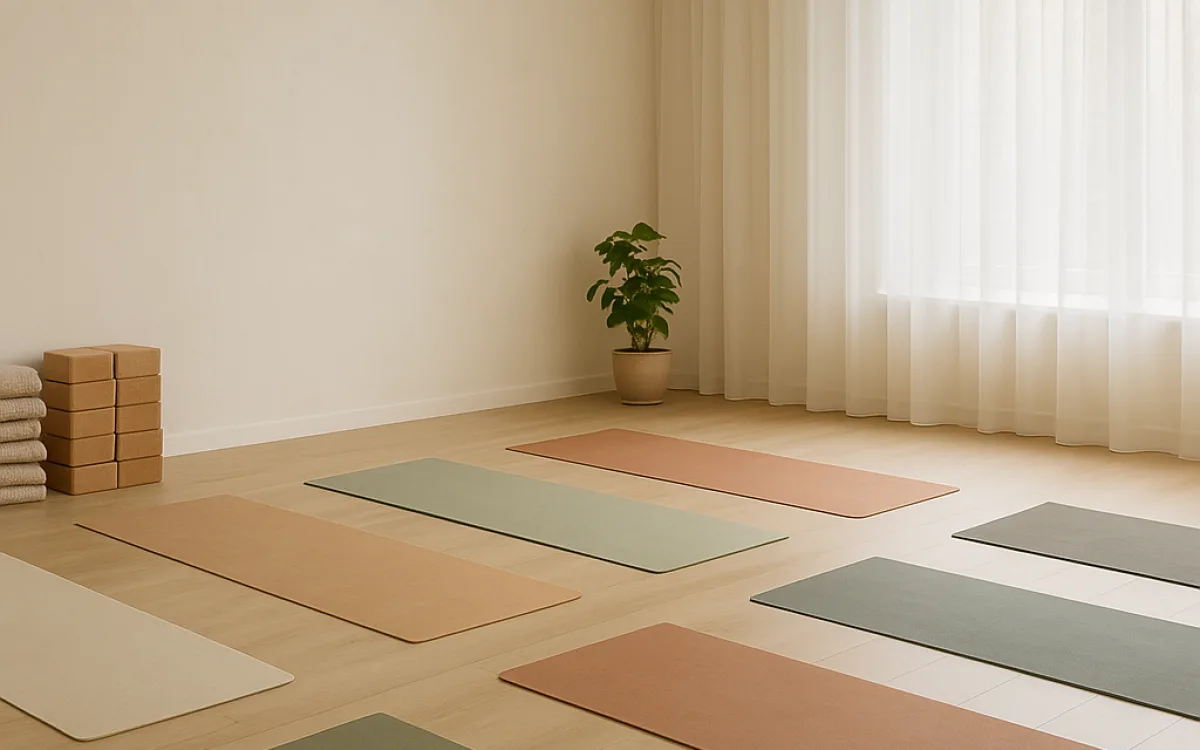
The instinct is to hide in the back corner. It is the wrong instinct, and it is the single most useful thing to know before a first class. The back row is where the experienced people go, because they do not need to see the teacher. From the back you will be looking at a room full of people who know the sequence, copying them half a beat late. The second row, towards the side, gives you a clear view of the teacher and takes you out of the mirror if there is one.
Point your mat the same way as everyone else, leave an arm span on each side if the room allows, and take a block and a strap even if you think you will not need them. Everybody takes props.
What actually happens in the room#
| Stage | Roughly how long | What you do |
|---|---|---|
| Settling | 3 to 5 min | Sitting or lying, eyes closed or soft, slow breathing. Nothing is expected of you |
| Warm-up | 5 to 10 min | Cat-cow, gentle twists, simple mobility on hands and knees |
| Standing sequence | 20 to 30 min | Sun salutations, warriors, balances. The busy part of the class |
| Floor work | 10 min | Seated stretches, hips, twists, a gentle backbend |
| Savasana | 5 to 10 min | Lying completely still under a blanket. Do not skip it and do not leave early |
If a class ends with everyone chanting a syllable and you would rather not join in, sitting quietly is entirely normal and nobody notices.
The bits people find awkward, answered plainly#
- Sanskrit names: teachers almost always say the English straight after. You do not need to learn any of it.
- Hands-on adjustment: many studios ask consent with a card or a show of hands. You can decline for any reason or none, permanently, without explanation.
- Falling out of a balance: happens to everyone in the room, several times, and is genuinely unremarkable.
- Not knowing a pose: look at the person diagonally in front of you, or stay in child pose until the next thing starts. Both are normal choices, not failures.
- Making noise: bodies make noise. Nobody in the room cares, including the teacher.
What to do when you cannot do a pose#
This will happen in your first class, probably several times, and how you handle it determines whether you come back.
- Take the modification the teacher named. There is always one, and it is offered for people exactly like you.
- If there was no modification, take child pose. It is the universal reset and it is never wrong.
- Do not push into a deeper shape to keep up. The only person tracking your depth is you.
- Ask the teacher afterwards. A thirty-second question at the end of class is worth more than a month of guessing.
Frequently asked questions
What should I wear to my first yoga class?
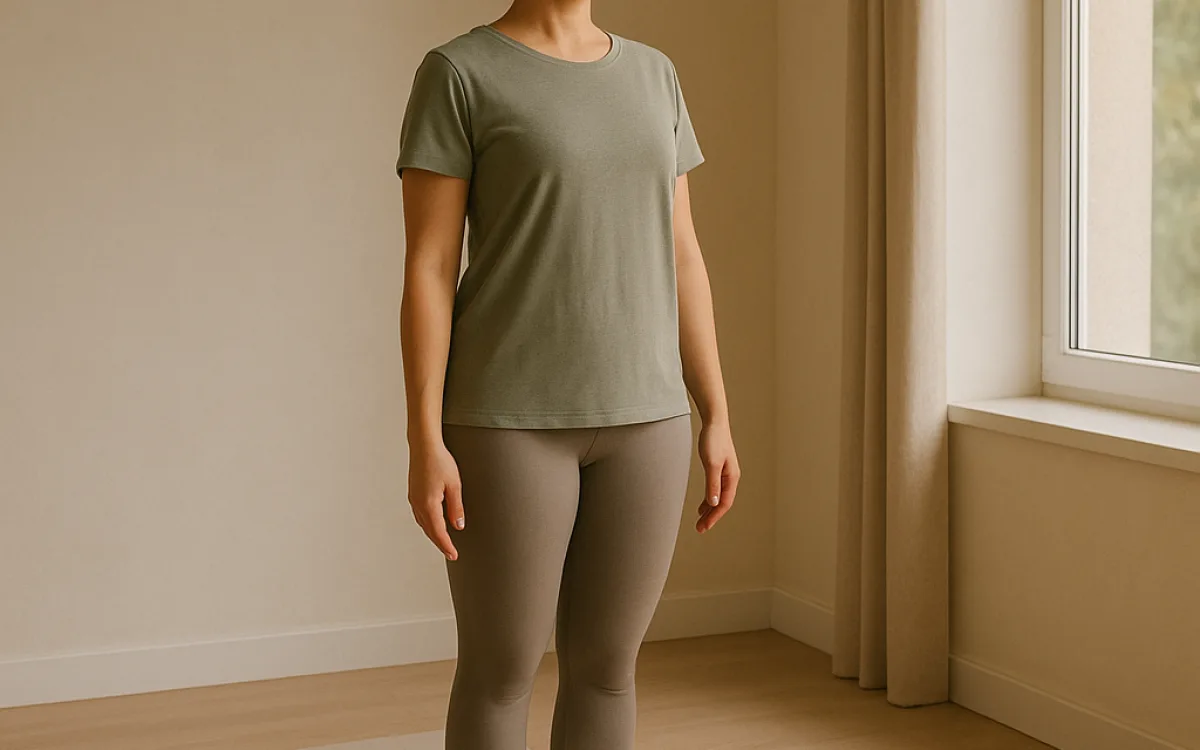
Clothes you can move in that stay put when you bend forward. A fitted or tucked t-shirt matters more than expensive leggings, because a loose top will fall over your face in downward dog. Yoga is practised barefoot, so no shoes and no socks — grip is a safety issue. Avoid anything with zips or thick seams at the hips and knees.
Do I need to be fit or flexible to take a beginner class?
No, and a properly run beginner class assumes neither. Everything is offered with a modification, and props exist specifically so that the pose can meet your body rather than the reverse. If a class makes you feel that you should already be able to do something, that is a poor class, not a poor student.
What is savasana and can I skip it?
Savasana is the five to ten minutes of lying still at the end. It is where the nervous system consolidates what the session did, and it is the part beginners most often skip because it feels like doing nothing. Leaving early also disturbs the rest of the room. If you genuinely have to leave, tell the teacher beforehand and go before savasana starts, not during it.
first yoga classwhat to expect yoga classbeginner yoga class etiquettewhat to wear to yogayoga studio for beginnerssavasana